By Jeximoraku editorial desk · Reading time: short
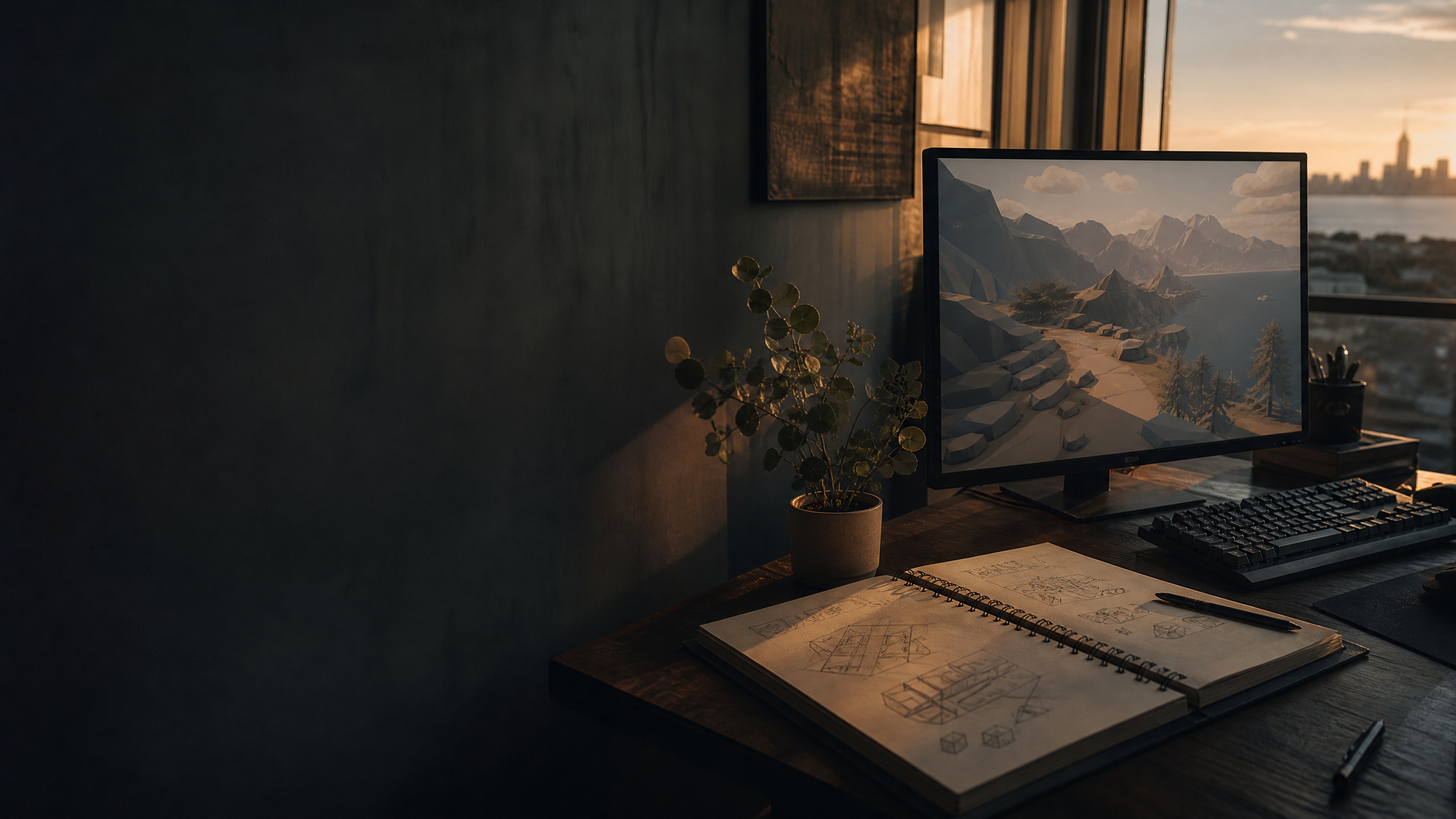
Early engine conversations can sound definitive. A team names a renderer, a toolset, a way of building scenes, and the work seems to acquire its borders. In practice, the useful decision is rarely the one that promises every feature. It is the one that makes the next experiment feel possible.
Start by locating friction
Friction is not always a technical problem. It might be the hour a designer needs to ask a question, the hidden cost of changing an animation, or the awkward hand-off that turns a visual idea into a ticket. Good tooling makes those moments visible without pretending they do not exist.
“A production tool is part of the atmosphere of a studio. Its best feature may be the confidence it gives someone to try a strange idea before lunch.”
Keep the scope human-sized
Pick a small, tangible scene and build it through the whole path: objects, sound, interface, a little iteration. This does more than test performance. It introduces the real questions a team will carry: who owns the change, where feedback lands, and how an unfinished thought becomes playable.
Share the working language
Engine choices carry vocabulary with them. A clear, shared vocabulary lets programmers, artists and designers describe an issue without translating it through three meetings. The result is not certainty; it is a more generous rhythm for uncertainty.
That is a useful criterion for any stack: can the people using it explain the next move to one another? If they can, the tool may be doing its work.
Share a studio note